
Category: Uncategorized Page 1 of 21

“Joke,” “Bobby,” “Little Bug,” “Next,” “Birds of Paradise,” “Grown” at HollyShorts

Judi Dench in “Joke” at HollyShorts 2026.
“Joke” is British and features Judi Dench in a scene that is closest to the end and lasts for under 5 minutes.It is 13’20” of jokes that Mooncalf Presents—itself a funny opening. None of the actors rang any bells in my head, with the exception of Dame Judi Dench, but the jokes are pleasant. So, what are the jokes of “Joke?”
1) A deacon is critiquing the very first sermon of a young girl who, among other things, entered by sliding down a banister, ripped up her sermon and threw it in the air after delivering it and—suggests the older priest ever so gently—“When you mention David and Goliath,you might say that David slew Goliath, rather than saying he went medieval on his ass.”
2) A deaf patient is told that his headaches might be alleviated if he put his head between his wife’s breasts. The patient is asking about his wife’s hearing and is told to ask her something softly and gradually move up towards her repeating the question. We learn by the end of THIS joke that the deaf one is not the wife but the husband. And the doctor assumed that the patient understood the breasts in question were attached to the patient’s wife, not the doctor’s!
3) A joke that involved confusion between yachting, versus anal sex was my personal favorite. It’s too long for the set-up, but suffice it to say that the punch line, “He only did it twice. Once he got sick and the second time his hat flew off,” was worth a chuckle.
4) The opening Archbishop of Canterbury joke and the piece involving masturbation were weaker than the others, but upheld the British tradition of randy references. The joke that Dame Judi was cast in (last of the short) was the weakest and involved a rooster; use your imagination.
“BOBBY”
This was a minute and a half and it was fantastic! Henry Burge wrote and directed and there is great action. The low pulsing beat of the music by Connor Musarra with sound design by Eliot Connors was terrific. Bobby has apparently taken at least $10,000. There are some people after him; they aren’t kidding around. I definitely want to see this one as a feature length film or TV series. I hope Anthony Skordi, Siri Miller, Noam Shapiro, Charlz Williams return in a longer feature length film. Director of Photography was Travers Jacobs. This minute and a half was riveting entertainment!
“LITTLE BUG”

Martin Freeman in “Little Bug” at HollyShorts 2026.
Starring Martin Freeman and written and directed by Matt Branston, a very cute Russian dog is chosen to go into space in 1957. Laika, the dog, is being sacrificed for experimental purposes. The pup is so cute and friendly that the phrase we hear from Alexandra Barredo and Martin Freeman, as father and daughter, is “I’m sorry we picked you.” Launched into space in 1957 and officially named Laika, “Little Bug” was the affectionate nickname of the small pup. At the end of the short film onscreen it says, “We did not learn enough to justify the death of this dog.”
“BIRDS OF PARADISE”
Stand-up comic Janeane Garofolo portrays Carmella Camin, a resident of Staten Island who is sick and tired of the hordes of feral wild turkeys that poop all over the place. At one point, she is shown bagging 149 pounds of turkey droppings and lugging it from the grounds. This is apparently a real thing in Staten Island, with no solution in sight. Sean Price Williams directed with Music Supervision by Nick Crane.


Michael Rapaport as Jake Rabinowitz in “Next”at HollyShorts.
Janeane Garofolo is the sole performer. She is great in the part.
“NEXT”
Michael Rapaport appears as actor Jacob Rabinowitz, who is auditioning for a role at the Denizen Theater in Water Street, New Paltz, New York. Denizen is the only European style Cinema Arts Venue in New York and collaborated on this 14’49” film written by Neil LaBute and directed by AdanPeltier.
Rapaport shows why he was used so regularly in Woody Allen movies, displaying true acting chops. He enters the audition with some credits in television and theater, including “guy at the next table in an episode of The Sopranos.” But it is the director—well-played by Mark Feuerstein as Tom (“Tommy”) Jeffries—whose memory conjures up their 7th grade year at Bowman East Junior High School, where the two were classmates.

MarkFeuerstein as Tom (“Tommy”) Jeffries in “Next” at HollyShorts 2026.
Apparently young Jake, when in junior high school with the director now casting his next project, bullied little Tommy Jeffries pulling his pants down in the school cafeteria and taking his lunch money.
Jake, who was the bully, is now to perform the monologue from “The Iron String” for its Writer/Director. I couldn’t help but think about another man with power who loves to humiliate others as retribution.
Director Jeffries has Jake do the scene over and over, changing the notes he gives him and ends by dismissing his childhood nemesis with a curt “We’ll let you know.”
Both actors were terrific in their parts. The piece was an exercise in humiliation but also perhaps a seasoned actor’s way of commenting on directors, in general. Perhaps the message beneath the words is to always be nice to others, because those you abuse on the way up you may meet on the way down.
I watched this one more than three times, to enjoy the great performances by the two leads and to ponder the message.
“GROWN”
An Honorable Mention should go here to the 15’ 16” film “Grown” that featured three girlfriends going out for a night on the town with fake I.D.’s. I laughed out loud when one of the three, getting her first look at her fake I.D. said, “Why are we from Idaho?” She also remarked that the photo was one submitted for a doctor’s appointment (facial work?). Sounded perfect.
As the trio sets off on their adventure, via subway, they encounter a loud drunk who leers suggestively at them. They immediately bury their faces in their phones. When the drunk comes close and says, “Where are you going tonight, ladies?” one of the three pipes up, “Your Mom’s house.” This is not well received by the drunk.
As they exit the subway ( I saw Bergen on a large sign, which is the only city In New Jersey I’ve ever been to; it was subsequently absorbed by Jersey City, New Jersey) one of the girls gets her period. Attending to this becomes a major need, including a stop at a convenience store. Frankie is the only one who has money, which the store clerk demands in order to let them use his rest room. Frankie slaps down a $100 bill and bolts for the rest room in the back.
The three reach the club where the bouncer (Zachary Zamski) immediately calls out the fake I.D.’s and denies the trio entry to the club. One feisty member of the trio even attempts to rush the bouncer, which does not work out well. At that point, a comment is made about the night’s planned entertainment and whether they can, indeed, take in the concert (which may have precipitated rushing the bouncer.) One of the girls says, to Frankie,“That was the plan, before we almost got triple fucked on the subway and you free-bled all over Brooklyn.” The line caused me to laugh so hard that Diet Dr. Pepper came out of my nose.
Kudos to Audrey Circello who wrote and directed. Writers don’t get enough credit, and this writing was exceptionally funny. Additional praise for Olivia Scott Welsh (Shawna), Sydney Leisir (Sabrina), and Savy Jackson who played Frankie. Willa Troy edited. The music was great (Selfish Soul, performed by Sudan Archives.)
An entertaining 15-minute short at HollyShorts 2026.


Synopsis: “Christmas Angels follows a single mother and her young daughter as they navigate poverty, and a mother’s determination not to let their circumstances rob her child of joy.” The duo are homeless, but (apparently) using wire (later used to make Christmas ornaments) to pick locks and find shelter from the wintery blasts. Loosely inspired by writer and co-director Ida Hoffman’s own life with a mother trying to raise three kids by herself, the film marks Ida Hoffman’s debut as a filmmaker.
Ida wrote the piece, directed it and stars in it with a skeleton crew and shot on a shoestring budget. Writer/Director Ida and Co-director Remington Hoffman do a great job of presenting the very attractive mother/daughter duo in distress. Remington deserves praise for the cinematography.
Una Bay Hoffman plays the part of Ida’s young daughter. She is charming in this real-life role. Any mother of a girl thinks their daughter at this age is the cutest child ever. Una certainly is in the running for that title in this film. She reacts with completely genuine familiarity. Most of the charm of the piece comes from watching the mother/daughter duo interact, although it is unlikely that homelessness was ever this much fun in real life or carried out in such high-style surroundings.
PLOT
It was a bit difficult, at first, to understand why Ida and her child hide from the male figure who enters the house, seemingly to pick something up. We later figure out that it is supposed to be Mitch Keeler, the real owner of this pricey piece of real estate.
When the security guard (Benjamin Chamberlain) discovers the mother and child within the house, dressed in large fluffy bathrobes, he apologizes, at first believing Ida’s story that the two are house-sitting. A quick call to Mitch Keeler quickly reveals that “Sarah Smith” is not really house-sitting. The security guard informs Ida that he is going to have to contact the police. At this point, the resourceful Mom Ida asks for a bit of time behind the door to change the two into clothes. They immediately flee.

However, in the very next scene, (apparently somewhere close by), the mother/daughter duo are shown knocking on doors selling home-made wire Christmas tree ornaments house-to-house (to buyers Niles Antoli and Josie O’Brien). The mother/daughter trespassers learn from Niles and Josie that most other residents in this upscale neighborhood have already left for the holidays, which is helpful news that comes at the right time.
The last scenes depict Ida once again picking the lock to gain entry.
CONCLUSION

The lovely homes—exterior and interior—and the beautiful child and mother make the cinematography (by Remington Hoffman) interesting and beautiful, featuring Christmas decorations and lovely homes. Watching the two frolicking and seeking shelter from the elements as occurred at the first Christmas in Bethlehem (in a manger and a stable) is touching. The film—shot with natural light—is beautifully photographed; the sound design is by Lucas Heinel.
The 13’ 25” short is pitched as “timely” in depicting the disparity between the “haves” and the “have nots” in today’s society. The only thing wrong with that logic is that the ability to lock-pick one’s way into posh lodgings for free seemed incredibly easy and unbelievably fast, since the two bogus lodgings seem to have been right around the corner from one another.
Plus, the mother/daughter duo appeared to be the legitimate residents. They are clean and cute and well-dressed in large fluffy robes that they also have apparently “borrowed.” Said the synopsis: “The story feels especially relevant now as economic inequality continues to grow and impact vulnerable populations, including single parents. While conversations around poverty often focus on statistics, Christmas Angels brings the human experience into the foreground and reminds audiences that dignity, imagination, and love are vital and exist far beyond someone’s circumstances.”

At times, this looked like an advertisement for luxury bedding or super-fluffy lounging bathrobes. The sets are beautiful and so are Ida and Una.
Homelessness never looked so good IRL .

 Director Rosell Tursi retells the story of her 72-year-old Italian grandmother, Rosa Tursi, who was taken hostage by bank robbers Bernard Belisle and Pierre Racicot in Montreal, Canada on September 1, 1983 in the 25-minute mini-doc “The Time My Grandmother Was Held Hostage by Bank Robbers.”
THE STORY
Convict Bernard Belisle had escaped from Parthenais Prison, where he was doing seven years of time. Bernard and an accomplice, Pierre Racicot, chose to rob a Royal Bank at Bernar and Park Avenue in Montreal. When things did not go smoothly and they were on the run, they saw the open door of Rosa Tursi’s nearby first floor flat and entered.
Armed with guns and a grenade, the duo took Rosa hostage. Bernard recalled that Rosa resisted being handcuffed saying, “She was a tough lady.” The stand-off lasted for 24 hours, during which time Bernard drank a Mountain Dew from Rosa’s refrigerator, offering to pay her for the beverage. Bernard remembered vividly the smell of Italian tomato sauce in the kitchen. He vowed that he would rather die than go back to prison.
THE DIRECTOR

Pierre Raicot in 1983 at the crime scene.
Rosa’s granddaughter, Rosella, who has been editing movies (14) and television shows (28) since at least 2018 decided to track down the truth behind the oft-repeated family story. Rosa, herself, died in January of 2006 at age 94, so it is relatives like Anna Tursi Cirino (daughter) and Morena Taylor and one of the bank robbers, himself (Bernard) who tell the story behind the story. As daughter Anna Tursi Cirino put it, “She was sitting there watching her soap operas and then her life became a soap opera.”
THE ROBBER
One of the robbers, Bernard Belisle, appears and is interviewed. His vow regarding death over imprisonment caused him to inject himself with ethanol, used in veterinarians’ offices, before being taken prisoner and carried from the house on a stretcher. Bernard was taken to the hospital where he remained in a coma for 3 days.

Bernard Belisle in 1983 at the scene of the crime,

Bank robber Bernard Belisle today.
Officials tacked on another 10 years in prison for Bernard as punishment for the escape and the bank robbery. Now reformed, he works at St. Thomas of Assissi Church in Montreal. Bernard knew nothing about his former partner in crime.
ROSA TURSI

Grandma Rosa Tursi on the left, as seen in photographs from “The Time My Grandmother Was Taken Hostage by Bank Robbers” at the HollyShorts 2026 Film Festival.
Rosella’s grandmother refused to move from her first floor home, despite expressing concern that all in the family keep their doors and windows locked from then on and the Tursi family’s concerns for her safety. She lived there, alone, until her death in January of this year.
The story, written by Christine Champagne in collaboration with Rosella, was interesting, and original music was provided by Mandy Hoffman. Newspaper photos and actual testimony from the reformed criminal himself (after 40-some years) made this 25-minute short about a feisty grandmother from Italy, who emigrated from Italy to Canada in 1952 into an interesting and entertaining mini documentary.
.

 HOLLYSHORTS FILM FESTIVAL ANNOUNCES 2026 AWARD NOMINEES
Top 10 Live Action Short Film Finalists Vie for the Festival’s Oscar®-Qualifying Award
The HollyShorts Film Festival today announced the nominees and finalists for its 22nd annual edition, recognizing standout achievements in short-form filmmaking from emerging and established storytellers around the world.
Taking place August 13–23, 2026 in Hollywood, HollyShorts brings together filmmakers, talent and industry leaders for screenings, panels, networking events and celebrations of independent cinema, culminating in the annual HollyShorts Awards Gala on Sunday, August 23.
At the center of this year’s competition are the Top 10 Live Action Short Film Finalists, competing for HollyShorts’ coveted Oscar®-qualifying awards, Grand Prix and Best Live-Action. They will also vie for the Best Director Award.
TOP 10 LIVE ACTION SHORT FILM FINALISTS
- Callback
- Echoes
- FAUX BIJOUX
- I Am the Prize
- Life Goes On
- Meeting Your Maker
- Never Give Up
- PALE SUN
- Talk Me
- VULTURES
BEST ANIMATION
- Apart
- Captives
- Gauze
- Saba
- With Tapes and Toasts in the Car
BEST DOCUMENTARY
- I Got My Brother
- The Chimney Sweeper
- The Second Life of Freddie Nole
- The Time My Grandmother Was Held Hostage by Bank Robbers
- When the Revolution Doesn’t Come
BEST DRAMA
- Copy, Save
- For Niko
- Gobstopper
BEST COMEDY
- Callback
- Disc
- The Oracle
BEST CINEMATOGRAPHY
- Hyena
- Shutterspeed
- The Kalgan Horse
BEST EDITING
- A Crime Across Four Landscapes
- How Brief
- HYENA
BEST HORROR
- Banshee
- Benny’s Second Birthday
- Thick Skin
BEST COSTUME DESIGN
- Betty St. Clair
- King of the Iron Will
- La Lucha de Lucia
BEST STUNTS
- Floor
- kaya (ᜃᜌ)
- The Impression
BEST INTERNATIONAL
- FAUX BIJOUX
- Souvenir
- VULTURES
BEST MIDNIGHT MADNESS
- MORTY
- Thanks to Meet You!
- The Seeing Eye Dog Who Saw Too Much
BEST MUSIC VIDEO
- Archbishop Harold Holmes
- The Macks – Dually of Man x The Modern Grape
- Weval — Open Up That Door
BEST PERFORMANCE
- Down the Length
- I Am the Prize
- Katya
BEST PRODUCER
- Bobby
- Last Stand at Butte City
- Laundreams
SAGINDIE AWARD
- Them That’s Not
- FarEye
- Woman Land
SOCIAL IMPACT AWARD
- AMERICA
- EXTREMIST
- Water Cooler
BEST SCI-FI
- EUROPA
- Imprint
- Infinite Rifts
BEST STUDENT FILM
- Crisis Actor
- Pankaja
- See You, Soon
HOLLYSHORTS × FILMIO STUDIOS AUDIENCE SHORT FILM DISCOVERY PARTNERSHIP
HollyShorts and Filmio Studios have also revealed the Top 10 finalists for their Audience Short Film Discovery Partnership, with five winners set to share $15,000 in cash prizes:
- Another Day in New York — Adam & Sean Pine
- Anxiety — Vladyslav Fidryk
- Christmas Angels — Remington Hoffman
- DOMINO SPRINGS — Dan Hertzog
- From Way Up Here — Celeste Chaney
- Girl | Dad — Lianzi Fields
- Jes and Lora — Patrick Coleman Duncan
- Naughty Maids — Rommel Rojas
- Size Queen — Kenny Fierro
- The POP — Eric J. Rodriguez
KODAK AWARDS
KODAK BEST SHOT ON FILM — 35MM
- It Comes in Waves
- Kink
- Signal
KODAK BEST SHOT ON FILM — 16MM
- El Tiguere
- FAUX BIJOUX
- Gobstopper
BEST TV
- Do I Know You From Somewhere?
- Savage
- Too Romantic
BEST EFFECTS
- Europa
- Oneiros
- The Color
BEST WEB SERIES
- Birth is for P*ssies
- Love Bomb Squad
- Why Do You Hate Me?
MADE IN LA AWARD
- Aaron and His Dad Try To Find Closure & Lucy Celebrates Andie’s Birthday at Universal Citywalk Hollywood
- Christmas Angels
- Spill the Frijoles
BEST MUSIC DOCUMENTARY
- Beatport x Miller Mix: Georgia
- Reflections Under the Electric Sky
- shut the fuck up, when WE speak
BEST SPORTS DOCUMENTARY
- Miles of Life
- SET PACE
- Zina
BEST PODCAST
- abandoned: The All-American Ruins Podcast
- Don’t Worry, No One’s Listening
- TWO THOUSAND AND LATE
ABOUT HOLLYSHORTS FILM FESTIVAL
The Academy Awards® and BAFTA®-qualifying HollyShorts Film Festival celebrates its 22nd edition in 2026, continuing its mission of championing short-form filmmakers and connecting emerging and established storytellers with audiences and entertainment-industry leaders.
The 2026 HollyShorts Film Festival runs August 13–23, 2026, headquartered at the TCL Chinese Theatres and venues throughout Ovation Hollywood in Los Angeles. The festival culminates with the HollyShorts Awards Gala on Sunday, August 23, 2026.
For festival information, schedules and tickets, visit HollyShorts.com


Luca Rickman,Dante.
“Chop Cheese” was directed by 25-year-old Sophia Meloni from a story idea from her 3-years younger brother Dante Meloni. There is a brief appearance near the end of the 15-minute short from Dad Christopher Meloni, familiar to fans of “Special Victims Unit” as Detective Stabler, who appeared opposite Mariska Hargitay in that role from 1999 until 2011.
Mariska Hargitay, godmother to Meloni’s son (Dante) and daughter (Sophia), is credited for her contribution at film’s end.

The short opens with three teen-aged boys entering a bodega to order chop cheese sandwiches from the old-timer manning the grill, Enzio (Mark Lake). Chop Cheese, spicey mayo seems to be the favorite for all three boys. They are en route to their own New York homes via the subway. One boy takes Train One. We learn that Luca’s character, Dante, has two moms and lives in the West Village.
The grizzled cook (Mark Lake as Enzio ) represents a sort of male model for Dante. He is familiar to the boy and always calls the young man “Boss.” Dante compliments the chef at the Village Gourmet Deli saying, “You’re the man.”
Enzio replies that he doesn’t own the grill; he just works there.

Mark Lake as Enzio the cook.
MORAL
When Mom Isabel Gillie notices that Dante’s purchases are mounting up, she insists that he get a job. Veteran character actor Lawrence Gilliard, Jr. (“The Wire”) makes an appearance here, as Dante’s co-worker, delivering Coca Cola and other food supplies, set in a large warehouse.
Upon returning to the Village Gourmet Deli, late in the short, Dante encounters two strangers behind the grill, played by Michael Gandolfini (son of James Gandolfini) and Christopher Meloni. Dante asks about the missing cook.
Enzio has left. This underscores the film’s main message, “People move on. Things change.”
At one point in the dialogue the Bodega chef had told the teenager, “It’s time to move on.”
Dante responded, “People move on.” Mark Lake, the grizzled short order cook said, “That they do, kid, or they don’t.”
CONCLUSION
I recently read a college application letter from a 17-year-old who commented that the normal routines of her life will change dramatically with her looming graduation from high school and subsequent entrance to college. It is true that young people sometimes fail to realize that there will be drastic changes to their lives as they grow up . In this short, we see Dante encountering that very fact of maturity, as represented by Enzio, the short order cook, who has simply left his long-time post and drifted out of Dante’s life.
The only constant in life is change; Dante is just realizing this as he matures into adulthood.
As the famous line from “The Outsiders” put it, “Nothing gold can stay.”

Joshua Bailey and Brandon Pickering, appeared in Davenport, Iowa, at The Last Picture House on Tuesday, June 2, 2026, with their film about Black Market Disney merchandise, “Stolen Kingdom.”
Writer-Director Josh Bailey is 31. Producer/Cinematographer Brandon Pickering partnered with Bailey in Austin, Texas. where both have day jobs in television. They worked on “Stolen Kingdom” for 5 years. Bailey and Pickering are on a 13-city tour with the film that opened the Florida Film Festival (both are Florida natives). “Stolen Kingdom” has done well on the film festival circuit. It was also well-received by an enthusiastic crowd at this stylish boutique theater in the Quad Cities. Chicago native Shane Simmons, a fellow actor/writer/director joined the duo as moderator for the evening.
The “Stolen Kingdom” team included Joshua Bailey (Writer/Director), Producer/Cinematographer Brandon Pickering, Sam Fraser, and Fugazi drummer Brendan Canty (who wrote the score). They have created a well-paced, visually-interesting, absorbing documentary about obsessive behavior that caused one film subject to say of himself, “You look like a psychopath!”
FLORIDA ROOTS
Both Bailey and Pickering are originally from Florida (Tampa). Both worked at Disney (or Universal) theme parks as youths. Pickering mentioned Halloween Horror Night at Universal. He volunteered the information that he was fired. “We both dropped out of the same film school.” (Valencia College in Tampa, Florida). This in-depth knowledge of the Disney World was invaluable to the project. I hope it is not the only subject the two filmmakers are this dedicated to, because it demonstrated real creativity with good pacing, great photography and comedic verve. The entire project also represented a lot of time and effort. Just organizing the material must have been a Herculean task! And now they are on a 13-city tour to cities they have probably never visited, like Davenport, Iowa. (Welcome to the Quad Cities! I’ll see you in Austin.)
Some photography of shadowy figures was impressive artistically and finding Richard McGuire (AKA Southern Pirate), who throws out the batshit theory that Disney is running a “torture prison” on its abandoned island attraction, was Cinematic Gold. (Yikes!)As Bailey told interviewer Simon Thompson in a February 14, 2025 Forbes magazine interview:”I had grown up consuming this content, made by people like Adam The Woo and Leonard Kinsey, some of the previous generation of creators, so when it started up again, we were really intrigued by it.”
However, as Bailey said, “If we don’t have Patrick (Spikes), we don’t have a movie.” He also said, “We were determined to break this barrier of anonymity with Patrick. We met with him one night and gave him fake names.” (The meeting took place at a 7-Eleven behind the Customer Member Parking at the Magic Kingdom in August of 2018.) “We had thought about trying to do this ourselves as urban explorers at Disney against our better judgment, so we created all of these social accounts, and I think that gave him some kind of trust in us. I think we were the first people to meet up with him, figure out who he was, and be boots on the ground with him.
“Patrick told us, ‘I have this and that celebrity’s phone number on speed dial. I call them and say, ‘Hey, I have this prop if you want to buy it.’ So we got in his car and drove around the property. There are a bunch of public roads behind Magic Kingdom, office buildings, and other things, and we found the redhead animatronic that had recently been removed from the Pirates of the Caribbean ride. He’s making calls, frantically texting people, and trying to make a deal. We don’t really know what was going on in his head. We left at about four in the morning, went home, and we were like, ‘This needs to be a documentary.'”

Brandon Pickering, Connie Wilson, and Joshua Bailey at The Last Picture House on June 2, 2026.
Patrick, himself, said, “I was the heart of the Black Market for a while.” He rattled on about being offered $75,000 for the Redhead from Pirates of the Caribbean and mentioned being offered $70,000 to steal Buzzy (which, later, he changed to $50,000, claiming he did not steal the animatronic figure). The off-the-wall scenes with the police interviewing Patrick and confiscating his phone and Patrick subsequently faking illness so he might be able to use a hospital phone: priceless black humor, The scenes are inter- woven skillfully, moving on to true tragedy as we learn of the death of Ed “Chief” Barlow, who died from malignant melanoma.
Hoot (real name – Dave Ensign) Gibson met Ed in 1986 and the two loved Disney’s parks, thinking that their jobs there would be a relief from high school bullies and teen age unhappiness. After signing on as Disney employees, however, they realized,”It’s basically high school in a different place.” Still, the two went adventuring in the abandoned attractions many times and became best friends. Dave’s grief at Ed’s passing is palpable. [The focus on these obsessed fans of abandoned sites was treated in a 2005 novel by David Morrell entitled “Creepers.” “Scavenger” in 2007 was the sequel. It’s a whole other world, Folks.] Hoot described himself as grief-stricken after Ed’s death. “I think I’m done being Hoot Gibson for a while. I just don’t care any more.”
We see Hoot scattering the Chief’s ashes at a Disney park.That is not a completely easy task for Dave. He was banned from Disney. Dave/Hoot’s take on stealing from the park is totally different from Patrick’s. Hoot/Dave spoke of stealing costumes and other expensive items as wrong; he seemed to consider it almost sacrilegious. He was genuinely touched and touching when he teared up while remembering his old friend Ed.
The film about a bizarre sub-set of people who obsess about visiting Disney and owning Disney memorabilia reminded me of another great documentary, “Secret Mall Apartment,” which was a hit at SXSW in 2024. https://www.themovieblog.com/2024/03/secret-mall-apartment-is-a-hit-sxsw-2024/
TRENDS TODAY

(L toR) Brandon Pickering, Shane Simmons and Joshua Bailey at the showing of “Stolen Kingdom” at the Last Picture House in Davenport, Iowa, on June 2, 2026.
According to Pickering, they used cameras from their day jobs in Austin television to keep cost(s) down. The film was made on a shoestring—less than $150,000. Currently, two films that are leading the box office on June 2, 2026, were also low-budget movies. “Obsession,” one of the two, rackedup $5.3 million, while the Big Budget film “Star Wars: The Mandalorian” took in only $2.2 million. Working your way up via YouTube is becoming one way for a filmmaker to make it in the industry. Another is to win big on the film festival circuit (Slamdance, Big Sky,et. al. qualify “Stolen Kingdom”). As ABC reported today, Generation Z may just save cinema; going to the movies is becoming fashionable again (along with buying at thrift stores.)
Jake Williams got a shout-out from the duo tonight and assisted some with the making of the film. He runs a YouTube channel (since age 17) that covers bankrupt and abandoned businesses. The two Florida natives —who said “we just found each other” (in Austin)— began their documentary about obsessive Disney fans (known as Pixie Dusters) in 2018, before the theft of Buzzy.
Buzzy had been sitting inside the shuttered attraction Cranium Command for eleven years before the 600-pound theme park remnant disappeared.
What happened to Buzzy?
That is a question that has other YouTube videos debating it. One of the filmmakers this night said, “It’s like the O.J. Simpson thing. There is literally no other suspect” (besides Patrick Spikes). Of course, any number of famous celebrity buyers could have purchased Buzzy via BackDoorDisney.We see Neil Patrick Harris describing a bit of Disney memorabilia that he bid on. Indirectly, Harris called out Jeff Bezos as another top bidder for a piece of Disney history. John Stamos admitted his own desire to own a piece of Disney history (his wife looked less thrilled with Stamos’ passion.)
DENOUEMENT
One famous purchaser who bought a bit of Buzzy’s clothing from Patrick was NBA basketball star Robin Lopez. Lopez was actually to be repaid $10,700 according to the 2020 court sentencing for Patrick Spike and his cousin. The duo was arrested in 2019 and the sentencing in 2020 (no contest) dictated $25,308 in restitution, including the Lopez refund and $6,703 to Disney. Patrick was also sentenced to 10 years of probation and 250 hours of community service.
The film will be rentable by August 1st and is available through Waterbox Video Store.

“Together, Forever:” World Premiere
at Sundance 2026 on January 24, 2026.(Photo Courtesy of Sundance Film Institute).
“Together Forever” is a 14-minute film that deals with a young Mormon couple on their wedding night. It focuses on all of the awkward “first time” sexual shenanigans. It would have helped me to have been raised Mormon, as the very concept of “roping” was foreign to me. To be brutally honest, it is still fairly incomprehensible to me, but I was raised Roman Catholic.
Writer/Director Gregory Barnes characterizes it as a “Mormon loophole” for having sex without benefit of marriage and—without the requisite Mormon upbringing and background—I’m taking his word for it. Director Barnes described the film as having been worked on by a crew that was largely ex-Mormon. I wondered if the crew gave the audience too much credit for being savvy as to what “roping” meant and aware of this “Mormon loophole”? I was also not surprised that most of those responsible for this Neon project are now EX-Mormons.
WRITER/DIRECTOR

Writer/Director Gregory Barnes of “Together, Forever” at Sundance on Saturday, January 24, 2026. (Photo courtesy of Sundance Film Institute).
Written and directed by Gregory Barnes (who grew up a devout Mormon in Oak Park, Illinois), this is a film from a queer director dealing with what seems like an anachronism in the highly sexualized world of 2026. I’m not Mormon (neither is Barnes any more) but I was raised with good old Catholic guilt regarding premarital sex in the dim dark pre-pill days.
I came of age in the sixties and fought hard for a woman’s right to choose whether or not to give birth, via access to the birth control pill—a modern miracle new on the scene when I came of age. I fought hard for abortion rights and reproductive rights for women all through the seventies. Look how well that is going for young women today (she said sarcastically.)
I come to the topic of marriage as an institution with 6 decades of marital bliss under my belt ( yes, I did use that phrase on purpose) and a daughter in her thirties who got engaged January 15th.
Therefore, I thoroughly enjoyed and related to this well-done short.
A few observations about the topic, in general. This should not be construed as criticism of the writing, directing, acting, cinematography (Fidel Ruiz-Healy), music (Jack Sobo) or editing (Jordan Michael Blake), all of which are good. The topic is well-executed and demonstrates why Writer/Director Gregory Barnes won the Jury Prize for U.S. Fiction Short at the 2021 Sundance Film Festival for “The Touch of the Master’s Hand,” Samuel Sylvester’s debut acting performance.
THE CAST

Lindsey Normington (“Anora) as Sydney in “Together, Forever” at Sundance, 2026. (Photo courtesy of Sundance Film Institute).
The two principal actors did a fine job. The enthusiastic Mormon bride, Sydney, is played by Lindsey Normington, who portrayed Diamond in 2024’s “Anora.” She also organized the first unionized strip club in Los Angeles. Bravo, Lindsey! You will continue to sparkle, (whether your character name is ever Diamond again or not.) You were great!
Likewise, Samuel Sylvester, who plays the possibly gay groom Caleb, is good in his part. This was his second acting role. He is currently pursuing his PhD at the University of Texas in Austin. [Did you know that, according to the Austin American-Statesman, the UT powers-that-be just made a philosophy instructor at UT who taught Plato remove some of Plato’s thoughts on sexuality?]
MORMON PRESIDENT’S WORDS ON MARRIAGE (c. 2004)
The short opens with the words of Mormon President Gordon B. Hinckley (2004) entitled “The Women in our Lives.” The setting is the Mormon wedding of Caleb and Sydney. The speech goes like this: “In the grand design, when God first created man, He created a duality of the sexes. The ennobling expression of that duality is found in marriage.”
Objection! Generations of closeted gay men and lesbian women date all the way back to Greek days. Ron Reagan, Jr.—the world’s most famous atheist—would disagree with the rest of the paragraph, but let’s move on to hear Mormon President Gordon Hinckley out: “For when all is said and done, there is no association richer than the companionship of husband and wife in the sacred name of Jesus Christ. Amen.”
Any person of a faith other than Christianity may want to debate Mr. Hinckley. From the vantage point of 58 years of marriage, with a son who celebrates 25 years of wedded bliss in November and a daughter about to embark on her own marital journey, it does not seem sporting to marry someone without fully disclosing the possible homosexual tendencies that Caleb seems to have.
Even the World’s Best Athlete of the time (Bruce Jenner) leveled with his then-wife about some of his desires (and you all know what happened next.) Sometimes, realizations about gender issues come after the knot is tied. That did not seem to be the case in “Together Forever.” [Shame on you, Caleb, for not being honest about your sexuality before marrying Sydney!]
And good luck with your sexual frustration, Sydney! The line, “I just thought our first time would be in garments” made me initially wonder what Sydney was talking about. I thought perhaps I had missed an important alternative definition or misheard her. Again, not a Mormon and not “up” on roping. [From Iowa, Illinois and Texas: only familiar with “roping” in the context of animal husbandry.]

Samuel Sylvester as Caleb in Writer/Director Gregory Barnes’ short “Together, Forever” at Sundance on Saturday, January 24, 2026. (Photo courtesy of Sundance Film Institute).
Returning to Gordon Hinckley’s thoughts on marriage: Although it is true that in the last five decades, two-thirds of all women were married or in a union, marriage is far from what it once was. Of women born in 1940, more than 90% married by the age of 30 (and 83% of men) but, in 1990, only 29% of women were married by the age of 30 and only 20% of men. It was the norm to “look for a husband” when you set off for college in the sixties, but that is no longer the overriding purpose of sending your single daughter off to college.
Nowadays, that daughter is a working woman and she isn’t getting married until her late twenties or thirties, whereas she married in her early or mid twenties in my day (married at 22; a mother at 23). My mother (born in 1907) was a very notable exception to this pattern, working and supporting herself as a teacher until her marriage at age 30 in 1927. (You go, Mom!)
Here’s another interesting talking point to think about in relation to “Together Forever.” In England and Wales, around 90% of those married in 2022 cohabited first. Those kinds of real-life statistics make the focal point of this film seem quaint or anachronistic. Since the middle of the twentieth century, marriage has become less common, couples are marrying later, more couples live together first

Lindsey Normington as Sydney in “Together, Forever” at Sundance, 2026. (Photo courtesy of Sundance Film Institute).
and there is a decoupling of marriage and parenthood.
All of the facts above are courtesy of “Our World Data” (Bastian Herre, Veronika Sambaska, Esteban Ortiz-Ospina, Max Baker), revised in February of 2025.
For me, the idea of this focus on sexuality not being permissible until after marriage seemed quaint. Since couples are living together more frequently (and without benefit of marriage) and participation in most religions in the civilized world has declined, is this aspect of the Mormon faith really a Hot Topic in 2026—even in Mormon circles? I’m not disputing it; I’m just asking.
CONCLUSION:
“Together Forever” had its World Premiere at Sundance’s Yarrow Theatre on Saturday, January 24th. It will screen again at Sundance on Wednesday, January 28, 3:00 PM, Public Screening 2 (Broadway Centre Cinemas 3) Thursday, January 29, 10:20 AM, Public Screening 3 (Redstone 3) Friday, January 30, 10:00 AM, Public Screening 4 (Holiday Village Cinema 2).
If you’re reading this while at Sundance, I enjoyed “Together, Forever.” I think you would, too

Healthcare in the United States has always been a complex web of policy, profit, and patient needs. While the system is designed to heal and protect lives, corporate lobbying has quietly tilted the scales in favor of powerful interests. Instead of focusing on affordable care and patient safety, healthcare lobbying often centers around profit margins, market dominance, and favorable legislation.
The US, in 2023, spent over $4,866 billion on healthcare, an amount significantly higher than the year before. Right now, the influence of money in healthcare policymaking has become so pervasive that it risks undermining public trust. At the same time, it is also
risking the integrity of medical care itself.
Of course, lobbying is not inherently illegal or immoral. In fact, it can serve a useful purpose when advocacy groups push for better access to medicines or stronger patient protections.
The real problem arises when major pharmaceutical corporations, insurance companies, and medical device manufacturers use lobbying to influence regulations. This, in turn, benefits their bottom line at the expense of patient well-being.
This imbalance can lead to serious consequences for healthcare costs, medical innovation, and patient safety, as you shall see upon reading further.

The Unhealthy Grip of Money on Policy
Pharmaceutical companies have significantly increased their lobbying efforts. The Pharmaceutical Research and Manufacturers of America spent a record $7.58 million on lobbying efforts. Major drugmakers are also logging some of their largest quarterly lobbying expenditures.
When billions of dollars circulate through Washington each year, lobbying can shape everything from drug pricing laws to hospital reimbursement rates. Big pharmaceutical companies often hire lobbyists to soften regulations or delay generic drug approvals.
This prevents cheaper alternatives from reaching patients who desperately need them. Similarly, health insurance giants lobby to limit coverage obligations, leaving consumers with fewer options and higher costs.
Patients are the ultimate losers in this game. They face inflated prices, limited treatment access, and, in many cases, unsafe products that should have been more strictly regulated. The steady stream of money from corporate lobbyists has made it difficult for independent lawmakers to act solely in the interest of public health.
Does Lobbying Affect Legal Battles?
When powerful corporations are accused of wrongdoing, their lobbying connections can subtly shape outcomes. Companies with extensive lobbying networks often push for favorable legislation or settlements that minimize their accountability. They can also sway regulatory agencies that oversee medical devices and drug safety, making it harder for victims to seek justice.
Take the Bard PowerPort lawsuit as an example. According to TorHoerman Law, the Bard PowerPort device is an implantable medical device designed for easy access to a patient’s bloodstream. It has been reported that the device can cause blood clots and other serious health risks among users.
Thousands of patients have claimed injuries caused by the device’s defects, leading to the Bard PowerPort lawsuit. Victims argue that the device fractured or migrated within their bodies, causing internal damage and severe complications.
Corporate lobbying could influence how these lawsuits progress, potentially shielding manufacturers from the full extent of their liability. If lobbying succeeds in shaping regulatory interpretations or settlement rules, many victims might never receive the compensation they deserve.
This creates an uneven playing field where corporations can leverage their wealth and connections to escape accountability, while ordinary Americans continue to suffer.

Shouldn’t Patient Safety Come First?
At the heart of the healthcare system should be patient safety. Every hospital, manufacturer, and policymaker should treat this as sacred. But when lobbying becomes a driving force, safety standards can be weakened or delayed.
Lobbyists often work to resist stricter testing or post-market surveillance rules for new medical products, arguing that they increase costs and slow innovation.
Having spent over $6.36 billion on lobbying from 1998 to mid-2025, the pharmaceutical and health products industry has outspent every other sector. In 2024 alone, it reached a record-high lobbying expenditure of $387.47 million. What such lobbying does is place patients in harm’s way, as unsafe products enter the market with limited oversight.
The Role of Lawmakers in Resisting Lobbying Pressure
Lawmakers have an ethical responsibility to ensure that healthcare decisions are based on science and compassion, not money. They must resist the pressure of lobbyists and prioritize patient welfare.
Campaign donations and corporate influence can distort even the most well-intentioned policies. The only way to restore trust in the healthcare system is through stronger transparency rules and clear separation between industry and regulation.
Public officials should demand disclosure of all lobbying activities related to healthcare and impose stricter conflict-of-interest policies for policymakers. These steps would not eliminate lobbying entirely, but could prevent it from undermining justice and public health.
In What Ways Can Inaction Cost the Nation?
If lobbying continues unchecked, the American healthcare system will drift further from its purpose. As the American Journal of Medicine notes, unchecked lobbying in health policy decisions will affect almost all aspects of healthcare. Prices will remain high, product safety will continue to suffer, and public confidence will keep declining.
The human cost of inaction is far greater than any short-term economic gain for corporations. Patients will continue to be treated as profit sources rather than human beings deserving care and respect.
The healthcare industry needs reform that places patients first and corporations second. The only way to achieve this is by drawing a clear line between legitimate advocacy and undue influence. Every dollar spent on lobbying to block reform is a dollar taken away from research, patient education, or affordable treatment.
Keeping lobbying out of American healthcare is not an idealistic goal; it is a necessary one. A system that prioritizes wealth over wellness cannot truly call itself humane.
The growing influence of lobbying has already caused harm by shaping policies that benefit the powerful while leaving patients behind. If America wants to rebuild faith in its healthcare system, it must start by cutting off the unhealthy relationship between politics and profit.

PLOT
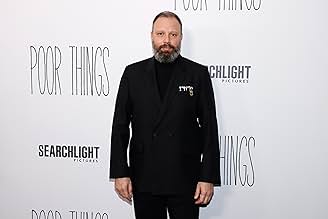
Director Yorgos Lanthimos
“Bugonia,” the new film from Yorgos Lanthimos, follows two conspiracy obsessed young men, portrayed by Jesse Clemens as Teddy and Aidan Delbis as Don. They kidnap the powerful CEO of Axiolith, Michelle Fuller (Emma Stone) because they believe she is an alien planning to destroy Earth. Cue the weird, the quirky and the bizarre: Lanthimos is back!
THE KIDNAPPING

Michelle Fuller (Emma Stone) in her office at Auxolith, where she is CEO.
The kidnapping sequence itself is worth the price of admission. Kidnapping Michelle Fuller (Emma Stone) is no easy task! She puts up one hell of a fight. That doesn’t prevent her from being restrained in the basement of Teddy’s ramshackle ranch house or from having her head shaved. (Teddy believes that it is through her hair that Michelle can communicate with the Mother Ship of her Andromeda alien Emperor and people.) The lunar eclipse is fast approaching and Teddy wants Michelle to take him aboard her Mother Ship to meet the Emperor of the Andromedans.
Teddy’s firm belief in how right he is and how wrong everyone else is rivals the MAGA movement’s acolytes. Trying to have a civilized debate with him can end in violence very quickly and often does. We are acutely aware of the danger that Michelle Fuller is in at all times. We worry for her every second that she is captive in Teddy’s basement.

Michelle Fuller (Emma Stone) held captive by Teddy and Don in “Bugonia” at the 61st Chicago International Film Festival.
One interesting promotional sidelight: the Culver Theatre in California offered free admission to anyone bald or willing to become bald (hairdresser on the premises beginning at 6 p.m.) on October 20th to see “Bugonia.” Culver Theatre also had a treadmill screening of “The Long Walk” when it opened, another creative concept.

Michelle outside her home, just before being kidnapped by Teddy and Don.
DIRECTOR
Yorgos Lanthimos honed his skills as a director working for television and has since released “Kinetta” (2004), “Dogtooth” (2009, which won “Un Certain Regard” recognition as Cannes), “The Lobster”(2015), “Killing of a Sacred Deer” (2016), “The Favourite” (2018) and “Poor Things” (2013). “Dogtooth”was nominated for the Best Foreign Language Film at the 2011 Oscars.
His films earn well-deserved adjectives such as tense, darkly funny, absurd, odd and weird. All apply to “Bugonia.” Lanthimos has said, “Me, personally, what I want is to allow people to be engaged actively in watching the film. I like to construct films in a way that makes you feel a bit uncomfortable, be able to enjoy them, be intrigued, start to think about the meaning of things – and hopefully by the end of it, you’ll have some strong desire to keep thinking about them.” There is a theme of the media’s power, as well as of the ability of large corporations to walk away from catastrophes they have created. He has amassed 5 Oscar nominations with 72 wins in other competitions and 193 nominations.
The film marks the fourth collaboration between Writer/Director Yorgos Lanthimos and Stone, with Emma Stone winning the Best Actress Award in 2023 as Bella Baxter in Lanthimos’s “Poor Things.”
SCREENPLAY/SOUND/CINEMATOGRAPHY
The writing, based on a 2003 South Korean cult film entitled “Save the green planet” is credited to Will Tracy and Jang Joon-hwan. Robbie Ryan is credited as the cinematographer and Jerskin Fendrix composed the score. I enjoyed the use of the Pete Seeger/Joe Hickerson song “Where Have All the Flowers Gone?” near film’s end, which ties into Teddy’s work as a bee-keeper and his obsession with saving the planet.
THE CAST

Teddy (Jesse Plemons) and Don (Aidin Delbis) in the basement of Jesse’s home, questioning Michelle (Emma Stone).
Jesse Plemons finally gets to sink his teeth into a lead role. He is a consummate supporting character actor, having started young, playing roles such as Philip Seymour Hoffman’s son in “The Master” in 2012. Plemons also played a younger version of Matt Damon’s character in “All the Pretty Horses” in 2000. A Mart, Texas native who is the great, great, great, great, great grandson of the sister of Stephen F. Austin (for whom Austin, Texas, is named), Plemons is in the Texas Acting Hall of Fame as of 2016. He was nominated for the Best Supporting Oscar for his role in “The Power of the Dog” in 2021, a year when he also appeared in “Judas, the Black Messiah,” another Oscar-nominated film.
More remarkably, he has appeared in 7 films that were nominated for Best Picture at the Academy Awards, starting with “Bridge of Spies” (2015) and continuing through “The Post” (2017), “Vice” (2018), “The Irishman” (2019), “Judas and the Black Messiah” (2021), “The Power of the Dog” (2021) and “Killers of the Flower Moon” (2023.) Perhaps most memorably, for me, was his appearance as stone cold killer Todd Alquist in Season 5 of AMC’s “Breaking Bad” television series. His earlier television work was as Landry Clark on “Friday Night Lights” from 2006 until 2011. (He was the only cast member who had actually played football.) He had a small role as a bad guy in “Civil War,” which starred his wife Kirstin Dunst in the lead role.

Jesse Plemons with wife Kirsten Dunst.
Plemons is great in “Bugonia” as a completely over-the-top psycho who has been brainwashed into his weird beliefs by his mother, Sandy, played by a mature Alicia Silverstone (“Clueless”). Teddy (Plemons) is so convincing saying “We are not steering the ship. They (aliens) are,” that cousin Don agrees to be chemically castrated so that he can focus solely on the task at hand. (“It’s all neurons, Dude. Kill the urges and be your own master.”) His co-star, Aidan Delbis, described as “a young actor on the autism spectrum, Lanthimos and Plemens met when he was only 17. Plemons said of him, “He brought so much to the movie and elevated it in a way that nobody else could have.” Considering the proficiency of Jesse Plemens and Emma Stone, this newcomer in his first feature film role was a key component of the film and definitely held his own.
Teddy and Don make the “Dumb and Dumber” 1994 team of Jim Carrey and Jeff Daniels look like Fulbright Scholars. In between Teddy’s focus on his bee hives and CCD (Colony Collapse Disorder) we get a glimpse of a tragic home life that has essentially wiped out Teddy’s own family of origin, although his mother Sandy still clings to life in a care facility while attached to tubes and ventilators. Whether verbally sparring with Michelle about who she truly is (Is Michelle human or an alien from Andromeda?) or convincing both his cousin Don and the Sheriff’s deputy Rick (J. Carmen Galendez Barrera) who babysat Teddy in his youth and admits to molesting him back then, Plemens’s Teddy is totally convincing.

Aidan Delbis as Don in “Bugonia.”
THE BAD
The script leaves us wondering about the totality of the back story of Teddy and Don. It is not completely clear who did what to whom. What, exactly, did the Auxolith Corporation do to Teddy and Don’s nuclear family? Who were these family members, besides Sandy? There is the implication that a large payment for malpractice because of a drug administered to Sandy that had horrible side effects was paid. Who were the others affected? There could have been a more transparent explanation of this important plot motivation for Teddy’s actions.
Similarly, Don’s exact relationship to Teddy (yes, he’s his cousin, but…) is only lightly explored. Even the nature of the hospital-like structure in which Teddy visits his invalid mother is not completely clear. Is it a rehabilitation hospital….a regular hospital…an asylum…what? These may seem like minor points, but much of what happens in Teddy’s attempt to “save the world from the aliens” seems born of a revenge motive, not unlike Luigi Mangioni’s recent actions against the United Health Care CEO. Shouldn’t we have a better understanding of who did what to whom, when, and why? The themes of truth in the media, lying versus truth, people locked inside echo chambers of belief who cannot break out of their closed belief systems because of the hype of Infowars- like sites: all topics are relevant and timely.
I also share the concern that Emma Stone of “La La Land” (1988) not be lost forever in a symbiotic partnership with just films in collaboration with Yorgos Lanthimos. We don’t want to see a talent like Emma Stone confined to playing psychotic odd-balls in every film. She has gone to the wall in this one, shaved head and all. Her stellar performance speaks for itself. However, I’d still like to see her as a normal girl in somebody else’s future film.
THE FINALE
 For me, the end, the finale, was the weakest part of this psychological thriller. Select whichever ending you desire, but the depiction of the one ultimately chosen was hokey. It was staged in a less-than-convincing manner. More significantly, it undercut the true real-world terror of Michelle’s lengthy captive ordeal.
Someone else expressed the sentiment, “I liked it, but I wanted to love it.” Thinking back over Lanthimos’s body of work, I’d express a similar opinion about most of the creatively odd plots from Lanthimos over the years, with the exception of 2013’s “Poor Things,” which I did love.
From the perspective of a demonstration of acting by two professionals at their creative peaks, “Bugonia” was perfect.