Welcome to WeeklyWilson.com, where author/film critic Connie (Corcoran) Wilson avoids totally losing her marbles in semi-retirement by writing about film (see the Chicago Film Festival reviews and SXSW), politics and books----her own books and those of other people. You'll also find her diverging frequently to share humorous (or not-so-humorous) anecdotes and concerns. Try it! You'll like it!

Category: Pop Culture Page 68 of 84

Any trends or popular fads may be described, whether it would be something like the hula hoop or the pet rock or simply new slang.

Back From Paradise

My panel: Topic – “Women Who Can Do It All”

I spent a week in Honolulu, Hawaii, presenting at the Spellbinders Conference held at the Hilton Hawaiian Village. I’m including some candid shots of the gorgeous surroundings, and the remarks made by 1992 Pulitzer-prize-winning Jane Smiley (“1,000 Acres”) and a quintet of Hollywood screenwriters who spoke of their work on such films as “Golden Eye” (the James Bond reboot), “The Book of Eli,” “The Hulk,” “The Punisher,” and many, many others, including many television shows.

1992 Pulitzer Prize-winning author Jane Smiley (“1,000 Acres”) lives in Carmel, California, now, with her husband Jack Canning, but there was a time when she was an Iowa (Ames) professor of writing and there was a time before that when she was a student at the acclaimed University of Iowa Writers’ Workshop.

It was this kinship over our Iowa roots (although Jane was born in Los Angeles and raised near St. Louis) that led me to ask her questions about her writing process at the first Spellbinders’ Writing Conference in Honolulu, Hawaii at the Hilton Hawaiian Village that is concluding on September 3, 2012.

Connie Wilson and Pulitzer-prize winning Iowa grad Jane Smiley.

After “1,000 Acres,” a retelling of Shakespeare’s King Lear story set on an Iowa farm was made into a movie with Jessica Lange, Jason Robards and Sam Shepherd, Jane Smiley moved on to write “Moo,” a humorous tale that dealt with politics at the university level. She told a charming story that went this way: “I was flying from Monterey to New York via San Francisco and I fell asleep on the flight.  One hour into the flight, I woke up to the sound of laughter. My seatmate was reading “Moo.” I said, “That’s my book.” She said, “No, it isn’t. I bought it in the airport.” I said, “No, I mean, that’s MY book. I wrote it.” She looked at me and said, “No, you didn’t.” Her laughter was the best compliment I ever got.

Asked about her years as a Professor of writing at Iowa State University in Ames, Iowa, Ms. Smiley said, “I did enjoy it. When we let them in, we explained it was NOT the University of Iowa (in Iowa City’s) world-renowned Writers’ Workshop. About one-fourth of them said, ‘Oh!’ (with disappointment in her voice). But most were engineers and engineers are used to doing their work. I’d give them writing exercises, like, ‘Eavesdrop for 3 days and then come to class and read what you’ve heard.’ That was hilarious! Or, ‘There are 3 beings in the room and something happens.’ Some of them would write about 2 people and a dog. It was really more fun than work.”

Author Smiley reads from her book “13 Ways of Looking at the Novel.”

When asked if she would ever consider teaching writing again, Smiley responded, “If I could do it MY way, I’d teach again.”

When asked how it felt to learn she had won the Pulitzer Prize for Literature (in 1992) she said: “My 14-year-old daughter was staying home that day. She was at that age where it is absolutely impossible to have any positive impression of her mom. A reporter from the Ames ‘Tribune’ called up and said, ‘What would you say if you were told that you’d won the Pulitzer Prize for fiction.’ I gave her some response. About 2 p.m. the phone rang and some guy from the Washington ‘Post’ called to tell me I had actually won. I said, to my daughter, ‘Honey, I think I won the Pulitzer Prize’ and she said, ‘Hmmmm. Cool.’ Later, in the hallway outside my office at the University, I heard someone screaming, and it was the stringer for the Ames Tribune. They (the Ames Tribune) had scooped the Des Moines Register, who had always scooped them. But, after you win, you go from being a wannabe to a has-been.  You are no longer cool—although I never was. I was 16 weeks pregnant at the time, so I didn’t have to run around and go to a lot of things, because I was throwing up all the time, anyway.”

Opening Night Luau.

On writing, in general:  “You can be the kind of person who enjoys the process, or you can be the kind of person who enjoys the awards.  If it enhances your feeling of being alive, of finding things out, remember that there are never enough awards.”

Labor Day in Hawaii at the Spellbinders 2012 Conference

Jim Strauss, Conference co-organizer and writer, addresses the brunch crowd in the Rainbow Tower.

A brunch was held for participants at the Spellbinders’ Conference this morning. Co-organizer James Strauss was the keynote speaker and James is always good. Although I try to make it a rule to “be the change I want to see,” and the change I want to see is starting things no earlier than 10 a.m., after blogging till 1:30 a.m. I fell out of bed, did a very bad job of make-up and hair (naturally, some young photographer wanted to take my picture and the lens was literally less than foot from my nose, as I stared into the lens, bleary-eyed and hair in disarray. THAT one will be good—NOT!), and traveled down in the Tapa Tower elevator to join the others in the ballroom where our meals have been being served. Or so I thought.

Nobody was in the room, when I arrived there, and when I tried to take the elevator back to my 18th floor room to check on the location in the program (a) the elevators would take me neither up nor down (b) I remembered I HAD no program, since I lent it to Jon Land, who needed it more than I did and (c) 4 other lost people were trying to find the location of the brunch. Among them were Susan Crawford and Peter Miller, agents present to take pitches. And we also collected some other lost folks along the way.

While Susan made phone calls to various others, we tried to find the Rainbow Tower, where the hotel had apparently moved the brunch without notifying those of us trying to find it. As a result, several of us were very late, but the food was (as usual) good, and Jim Strauss, as always, gave an amusing and interesting talk to the assembled masses.

Authors Jacqueline Mitchard (“The Deep End of the Ocean”), Jon Land (the Caitlin Strong series) and Gary Braver (back to camera) listen to James Strauss’ speech.

Originally, some of the members of the group were to move on to Turtle Bay. I think that idea has been jettisoned in favor of staying on here at the Hilton Hawaiian Village, but what do I know? (Jim also told me that the entire cast of “Hawaii 5-0” was going to substitute for the MIA John Travolta and Garry Marshall, but I think this was his idea of a small joke. I don’t watch “Hawaii 5-0” and Scott Caan is too short for my Favorite Leading Man, so no big loss.)

Meanwhile, we’re checking out the cost to “rent” an umbrella on the beach. Yes, you heard me right. To rent one. They are not free to hotel guests. And the riff-raff from town are no longer allowed to congregate anywhere in front of the hotel–[-if they ever were.]

I love Hawaii and always have, but I can assure vacationers that, if you travel to Cancun and stay where we stay (the Royal Resorts properties), you won’t be charged extra to sit under one of the fixed “palapas” on the beach in front of the Royal Sands or the Royal Islander. I used to call Cancun “the poor man’s Hawaii,” but, of late, it has gotten pricier, as well. Still, charging $6.50 for ONE coke beats Australian prices (gas is cheaper than Illinois, however), and making guests pay for the use of an umbrella is a new twist on gouging the tourist trade, which would probably not cause the tourists to want to repeat the experience, if a similar beach could be experienced, with bluer water and cooler sand, for NO extra expense.


Casual shot of the group as the brunch broke up.

The food has been uniformly great. The presentations have been useful and enjoyable. As usual, I never hear anyone say, “Hey, we’re going to go hang out at ________ after this. Wanna’ come?” but that is probably because I’m a minnow in the literary pool. Still, it would have been nice to have been frequenting the bar where Shelley Berman showed up last night (he has a guest spot on “Hawaii 50,” they say), but why should this be any different than ThrillerFest or HWA or Love Is Murder or the Backspace Writers’ Conference or any other writing thing I have ever attended?  I go. I pay my money. I am pleasant to one and all. I attend the functions. I end up in  my room  watchong TV, because I think you have to reach a certain level of income or popularity or thinness or attractiveness or something-ness to ever be allowed into the “Inner Circle” that gads about. Just the way it is. Unlikely I’ll ever reach that stratosphere. But at least the husband and I are here together, which gives me ONE person who doesn’t blow me off repeatedly and take off with a large group to go socialize and have fun at the “in” places I am not aware of.

Paradise.

.

Two more days of fun in the sun.

No idea what the deal is with this guy. He is either starting his own religious sect, stretching before or after exercising, mourning the recent death of the Reverend Sun Myung Moon or planting something. He was in that position for a LONG time, though, folks, and it looked extremely uncomfortable.

Hilton Hawaiian Village grounds.

View from the Rainbow Room brunch.

Jim Strauss, the ubiquitous Nadia (not Comanece), Tony and Tori Eldridge (“Lone Tree Productions), after the Spellbinders’ Brunch.

2012 Spellbinders’ Conference in Hawaii Winding Down: Jane Smiley Speaks

Connie Wilson & Jane Smiley in Honolulu.

If you grew up in Iowa, as I did, or attended either the University of Iowa (Iowa City), as I did, or Iowa State University (Ames, Iowa), you probably remember when Iowa City graduate Jane Smiley, author of “1,000 Acres” won the 1992 Pulitzer Prize for fiction.  She followed up that tragic retelling of the King Lear story, set on an Iowa farm, with “Moo,” a comic piece that poked some fun at the politics of teaching on a university campus.

Jane Smiley has been in residence at the 2012 Spellbinders Writers’ Conference in Honolulu, Hawaii, and her workshop on writing, which I attended, had much valuable information to share with less proficient authors—like me!

It was also fun to hear her tell the story of the day she learned she had won the 1992 Pulitzer Prize for Fiction and other stories from the career of someone who is truly a much deeper thinker than Yours Truly. Jane Smiley (“1,000 Acres”) lives in Carmel, California, now, with her husband Jack Canning, but there was a time when she was an Iowa (Ames) professor of writing and there was a time before that when she was a student at the acclaimed University of Iowa Writers’ Workshop.


Pulitzer-prize winning author Jane Smiley with husband Jack Canning at Opening Night luau on August 31, 2012.

It was this kinship over our Iowa roots (although Jane was born in Los Angeles and raised near St. Louis) that led me to ask her questions about her writing process at the first Spellbinders’ Writing Conference in Honolulu, Hawaii at the Hilton Hawaiian Village that is concluding on September 3, 2012.
After “1,000 Acres,” a retelling of Shakespeare’s King Lear story set on an Iowa farm, was made into a movie with Jessica Lange, Jason Robards and Sam Shepherd, Jane Smiley moved on to write “Moo,” a humorous tale that dealt with politics at the university level. She told a charming story that went this way: “I was flying from Monterey to New York via San Francisco and I fell asleep on the flight.  One hour into the flight, I woke up to the sound of laughter. My seatmate was reading “Moo.” I said, “That’s my book.” She said, “No, it isn’t. I bought it in the airport.” I said, “No, I mean, that’s MY book. I wrote it.” She looked at me and said, “No, you didn’t.” Her laughter was the best compliment I ever got.”


Jane Smiley at luncheon on September 2, 2012.

Asked about her years as a Professor of writing at Iowa State University in Ames, Iowa, Ms. Smiley said, “I did enjoy it. When we let them in, we explained it was NOT the University of Iowa (in Iowa City’s) world-renowned Writers’ Workshop. About one-fourth of them said, ‘Oh!’ (with disappointment in her voice). But most were engineers and engineers are used to doing their work. I’d give them writing exercises, like, ‘Eavesdrop for 3 days and then come to class and read what you’ve heard.’ That was hilarious! Or, ‘There are 3 beings in the room and something happens.’ Some of them would write about 2 people and a dog. It was really more fun than work.”
When asked if she would ever consider teaching writing again, Smiley responded, “If I could do it MY way, I’d teach again.”
When asked how it felt to learn she had won the Pulitzer Prize for Literature (in 1992) she said: “My 14-year-old daughter was staying home that day. She was at that age where it is absolutely impossible to have any positive impression of her mom. A reporter from the Ames ‘Tribune’ called up and said, ‘What would you say if you were told that you’d won the Pulitzer Prize for fiction?’ I gave her some generic response.

Jane Smiley, reading from her book, “Thirteen Ways of Looking at the Novel” during her conference presentation at Spellbinders’ Conference in Hawaii.

About 2 p.m. the phone rang and some guy from the Washington ‘Post’ called to tell me I had actually won. I said, to my daughter, ‘Honey, I think I won the Pulitzer Prize’ and she said, ‘Hmmmm. Cool.’ Later, in the hallway outside my office at the University, I heard someone screaming, and it was the stringer for the Ames Tribune. They (the Ames Tribune) had scooped the Des Moines Register, who had always scooped them. But, after you win, you go from being a wannabe to a has-been.  You are no longer cool—although I never was. I was 16 weeks pregnant at the time, so I didn’t have to run around and go to a lot of things, because I was throwing up all the time, anyway.”
On writing, in general:  “You can be the kind of person who enjoys the process, or you can be the kind of person who enjoys the awards.  If it enhances your feeling of being alive, of finding things out, remember that there are never enough awards.”

Asked to assess her effect on the lives of others, the self-deprecating Smiley said, “I never think that way. I cannot experience myself from outside.”
Truly a class addition to the Spellbinders Writers’ Conference in Honolulu, held from August 31st to September 3rd, 2012.


Spellbinders Writers’ Conference in Hawaii on September 1st, 2012

I have come to the lobby of the Hilton Hawaiian Village to reflect on the first day of the Spellbinders Conference in Hawaii.

Gary Braver.

For me, it began with Gary Braver’s presentation on writing genre fiction, a truly excellent one. I had wanted to attend his presentation at the final Hawaii Writers’ Conference, but it filled quickly and this Boston-based college professor and author shared much useful information.
That was followed by a panel with Jon Land (author of the Caitlin Strong series), the author of the Batman graphic novels (I’m down here without my program, so forgive me for being vague), F. Paul Wilson and Gary Braver, again. This was truly a good panel.

Jon Land,author of the Caitlin Strong novel series.


Kaui Hart Hemmings, author of “The Descendants.”

The young woman you see being interviewed during the lunch break (lunch was great!) hit the jackpot with her very first novel, which was made into the film “The Descendants,” starring George Clooney. Kaui Hart Hemmings is currently working on a novel set in Breckenridge, Colorado.
The lunch program said that Tia Carrere was to be interviewed during that period of time. Instead, here is James Strauss interviewing a movie director. Nobody at my table caught the movie director’s name, but that’s immaterial and secondary to the fact that he definitely is not Tia Carrere.


Author Jane Smiley, winner of the 1992 Pulitzer Prize for her Novel “1,000 Acres” and me at lunch in Honolulu at Spellbinders Conference.

My lunch table included Jane Smiley and Jack Canning, who met when he was contacted to do some work at her house in Carmel. At the time, Ms. Smiley was going through a divorce. Enter Jack. Later, I attended her panel discussion and she shared some passages from her book “13 Ways of Looking at the Novel” in which she read bezillion great works of literature and analyzed them for such things as, “How much of the novel is taken up by exposition?” (A:  10%). “At what point should the denouement begin?” (A:  90% of the way in.) It was a very interesting and informative panel, and I was glad I was an English major in college, with PhDconcentration, or you could definitely be left in the dust very quickly.

After lunch, the panel on which I presented–all of us basically the “lesser lights.” (It was not well attended)

“Women Who Can Do It All” panel in Hawaii at the Spellbinders Writers’ Conference.


After Ms. Smileys panel, F. Paul Wilson spoke about characterization and point-of-view in genre writing. Author of the Repairman Jack novels, after 15 years of writing the series, he is ending it. I gave him a copy of “Hellfire & Damnation II,” but I fear he will find it lacking. From what comments he made, he is an exacting taskmaster and will be pickiest on those things I do most poorly. Nevertheless, he is in possession of a copy of my newest short story collection, and perhaps he will take pity on a rookie like me. Although I wrote 3 volumes of “Ghostly Tales of Route 66,” they were works for hire and I had little leeway in including language not

F. Paul Wilson.

suitable for a 10-year-old. Plus, I had to lay out the book, which is asking for trouble. Nevertheless, I drove the route in 10 days, wrote each 18,000 page book in a week, and did the best I could under the most adverse circumstances.  “Hellfire & Damnation,” the original short story collection, was damaged by an unscrupulous sort who stole 3 of my short stories at the moment of truth, putting them in his own collection without any permission to do so. I had to quickly run in some of the “G-rated” ghost stories, and the collection suffered. “Hellfire & Damnation II” is a better collection, plus it has pictures, although I do admit to liking a few of the original collection’s stories, such as “Confessions of an Apotemnophile.” (Apparently, the Berkeley Fiction Review liked that one, too.)
Next came the luau, which was quite festive. The fire baton twirler deserves kudos. The drinks for the event, however, were outrageous, at $6.50 for 2 Diet Cokes and $22 for one white wine (in a plastic cup) and one beer. It did not appear that the bartender was doing much business, as a result. A light sprinkling of moisture ended the night for most of us, with another full day tomorrow.
It is also the celebration of the Queen’s birthday and Iolani Palace will be open.

The luau crowd watches in amazement.

You can never have enough pictures of a fire dancer.

Fire dancer at Spellbinders’ luau.

What else—? Hula dancers at the luau.

Spellbinders Conference in Hawaii on Aug. 31, 2012

Pulitzer-prize winning author Jane Smiley and Jack (her significant other) who live in Carmel, California, now, but Jane is an Iowa graduate and taught at Ames for many years.

I’m here in balmy Hawaii on the 18th floor of the Hilton Hawaiian Village and tonight was the Welcome Cocktail party, which had rumaki, crab cakes, and many other delicacies I was not able to identify. (Drink tickets, too). I enjoy it immensely. Not only did I get to meet the great Jane Smiley, who wrote  “1,000 Acres” and won the 1992 Pulitzer Prize for same, but I found out about the December 15th New Orleans Writers’ Tour of that great city (a fundraiser, primarily) and met Gary Braver of Boston, whose class I so wanted to take back when the last Hawaii Writers’ Conference under John Tulius was held.
This is a “new, improved” Hawaii Writers’ Conference, with no Mr. Powers (thank the Lord) but Gary Braver is still here and many new and equally gifted writers, including F. Paul Wilson (whom I shall referemce as Cousin Paul henceforth, to his eternal consternation), Jane Smiley, Gary Braver and others. I cannot think of all the names of all the luminaries, but Heather Graham and I talked at length about her wonderful fund-raising efforts to aid New Orleans and how that will go down, again, on Dec. 15th, this year, with Jonathan Maberry and David Morrell in attendance. I hope to be there.

Author Jane Smiley, Writer James Strauss (“House,” “Deadwood,” “John from Cincinnati,” the novel “The Boy”) and his wonderful wife of 44 years, Mary) in Hawaii at the Spellbinders’ Welcoming night cocktail party, which James helped helm.

The weather has been balmy, slighty windy, about 80 degrees and typically Hawaiian. I always wanted to retire to Hawaii, but was soon dispossessed of that delusion after the reading of the will. (“Well, you can RENT a place for a couple of weeks but you can’t LIVE there.”)

Here I am, however, on my 6th or 7th trip to the Islands and scheduled to present (with others) tomorrow at 2:00 p.m. till 2:50 p\.m

A wonderfu; time.

“Target Audience Magazine” Reviews “Hellfire & Damnation II”

Review of Hellfire & Damnation II

by on August 27, 2012 with 0 Comments in Book Reviews

Wilson has written a book of short stories that will not only keep you up late nights reading, but might also keep you up long after you have stopped reading.

By Evelyn Smith, author of “City of the Undead” and “Transylvania, Louisiana.”

“Hellfire & Damnation 2” by Connie Corcoran Wilson is all the things any good compilation of short stories of a chilling nature should be.  It’s scary, holds one’s interest enough not to want to put down, and at times, a little disturbing.  Wilson has written a book of short stories that will not only keep you up late nights reading, but might also keep you up long after you have stopped reading.

In “Cold Corpse Carnival,” Wilson gives voice to a frozen corpse who becomes a tourist attraction.  I found this story pleasantly chilling. Most of her stories in fact, should give the reader a slight shudder or two.  It is to Wilson’s credit as a writer and her story telling ability that I found “The Shell”, the story of twelve year old Lisa who is abducted, vividly disturbing.  In fact, I can’t recall being this disturbed by a writer’s imagination since reading Poppy Z. Brite years ago.  So Wilson is in fine company with her ability to evoke certain emotions from the reader.

“Tempis Fugit: Resurrection Cemetery” is a ghost story and a good one at that.  If you are a fan of the old “Twilight Zone” television series, you will enjoy her story, “The Champagne Chandelier”, which indeed reminded me of an episode of that series.  Wilson is a writer with a sense of humor and it is entirely evident in “M.R.M”, the story of a long suffering husband who tinkers in his basement workshop, attempting to build a new and improved version of his not-so-nice wife of thirty years.

Her sense of humor is also evident in a story called “Room Service,” a tale of homicidal rage.  This story is an entirely satisfying read.  Especially if one begins to imagine anyone in one’s life who is particularly irritating.  While reading “Oxymorons,” I saw it as a movie in my head. It is in the mode of a political thriller, perhaps starring Clint Eastwood as the male character, Howard, who relates the story.

All in all, Wilson’s enjoyably spooky tales will grasp your emotions with a skeletal hand and pull that  hitching gasp from your throat.  That is the sign of a good writer.

Visit http://www.hellfireanddamnationthebook.com/

Virtual Tour Dates for “Hellfire & Damnation II in October

Hellfire & Damnation II: Virtual Tour

Hellfire & Damnation II will begin an E-book tour on October 11th, which will run through Halloween. There will also be an official “launch” party at a Book Rack location in the IA/IL Quad Cities on Halloween weekend (Saturday, October 27th and, potentially, Sunday, October 28th. Watch the author’s blog (www.WeeklyWilson.com) for more details.

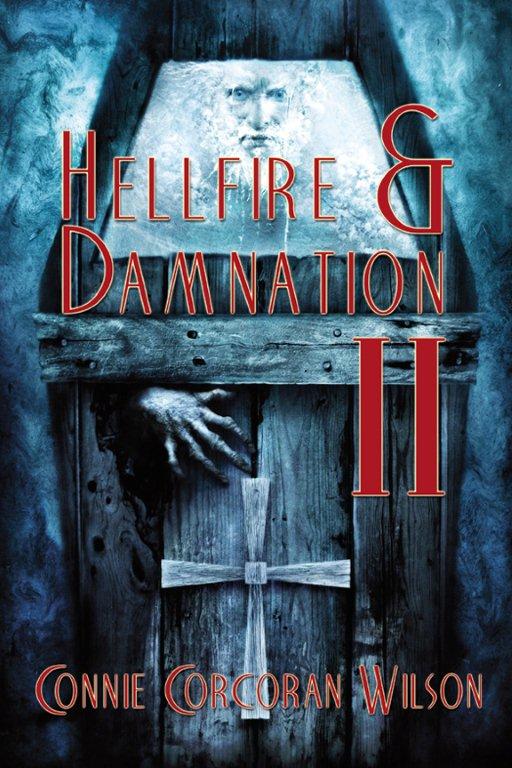
Cover art by Vincent Chong of the United Kingdom.

Here are the tour stops for “H&D II” beginning October 11th, 2012:

Little Black MarksOct. 11, 2012Giveaway & Interview
The WormholeOct. 12, 2012
The BookwormOct.15, 2012
Rhodes ReviewOct. 16, 2012
J.A. Beard’s Unnecessary MusingsOct. 16, 2012
JoystoryOct. 17, 2012Giveaway & Interview
Turning the PagesOct. 18, 2012
Over the Cups of CoffeeOct. 22, 2012Giveaway & Interview
Mom in Love with FictionOct. 23, 2012
Books & More BooksOct. 24, 2012Giveaway
Celticlady’s ReviewsOct. 25, 2012
Em SunOct. 25, 2012
Butterfly-o-Meter BooksOct. 26, 2012Giveaway and Guest Pot


Sweeps for BloggersOct. 30, 2012Giveaway
Alexia’s Books & SuchOct. 31, 2012

Late addition: Amber at peaceful.wishings@yahoo.com on October 26th


Please be aware that the book will be FREE on Kindle for the 5 days leading up to Halloween (October 27, 28, 29, 30 and 31). It is also in the Kindle Prime program.

In paperback, there will be a book signing at the Book Rack in Moline or Bettendorf on Saturday, October 30th. Details to be announced closer to the actual signing date.

“Hellfire & Damnation II” Book Trailer is B=Now “Live” on Yahoo

http://youtu.be/o99OC1EWgs0

Here is a link to the new trailer for “Hellfire & Damnation II.'” Hopefully, it will be posted to the dedicated site, www.HellfireAndDamnationTheBook.com by the weekend. The old book’s trailer will remain behind it.
Who knows how many books there will be? Only the Shadow knows, for sure.

“Hellfire & Damnation II” Out Soon: See Introduction Below


Hellfire & Damnation 2 Cover

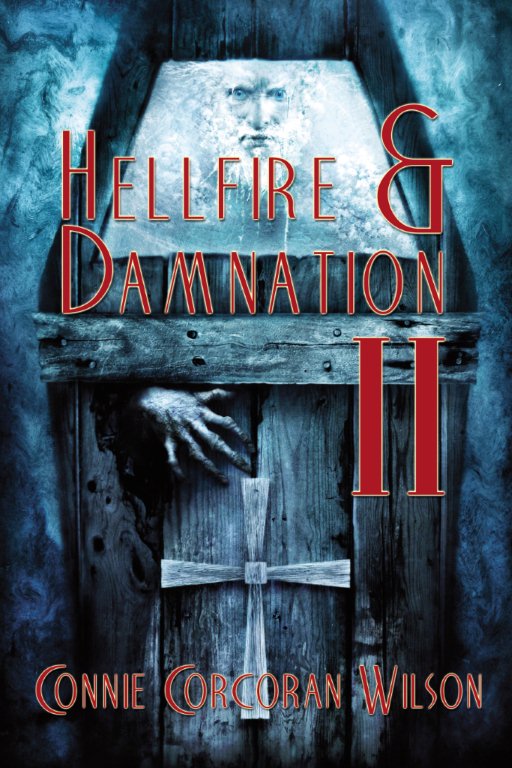
Vincent Chong's cover for "Hellfire & Damnation II"

Rising star in the horror genre Jason V Brock, who both writes and publishes, has penned the Introduction to “Hellfire & Damnation II,” the sequel to “Hellfire & Damnation,” a collection of short stories, both of which revolved around the framing device of Dante’s “Inferno” and the 9 Circles of Hell (and each crime punished therein.)

The first book (www.HellfireandDamnationTheBook.com) was a 47,000 word collection of stories. This second book is longer, at 53,000 words, and contains approximately 25 pictures to illustrate the work, plus a From the Author section describing how each story was inspired.

The E-book should be ready for purchase from Amazon and Barnes & Noble by July. The paperback, from The Merry Blacksmith Press, is scheduled for Labor Day release. In addition to the Introduction by Jason V Brock, blurbs are tentatively slated from Fran Friels (2006 Stoker Finalist “Momma’s Boy”), Gary Braunbeck, Nate Kenyon, Terrie Leigh Relf, and Brian Pinkerton.


Introduction:


A World Gone to Hell

The Italian poet Dante Alighieri is a tough act to follow. His epic poetry tour de force, the Divina Commedia (Divine Comedy), ranks as one of the single greatest achievements in all of world literature. It was a major reason that the dialect from his native Firenze (Florence, Italy, later to be the cradle of the greatest Renaissance in Europe) was codified as the principal language of Italy, even to the present day. One segment of this magnum opus, the Inferno, is among only a handful of literary pieces that has transcended its creator’s original intentions to rank in the same echelon as (among others) Homer’s dual narratives The Iliad and The Odyssey, John Milton’s Paradise Lost, and The King James Edition of The Bible. Not only are these works a core foundation of Western thought and erudition, but they also stand as monumental artistic expressions of unfettered genius. The other two pieces of Dante’s Commedia – the Purgatorio, and the Paradiso – while dazzling efforts, do not quite rise to the same level as the Inferno.

The fact of its rank among humankind’s singular greatest creative representations – not to mention its powerful political subtexts and religious preoccupations — has not intimidated others from trying to emulate Dante and his astonishing feat. Nor should it: Dante’s masterpiece has inspired writers, artists, dramatists, musicians — even filmmakers — for hundreds of years, as any great work should. Such is the power of the written word wielded by a keen intellect, honed by a sharp wit, and expressed with passionate conviction.

The book in your possession is an example of one of the many attempts at something new that has taken Dante’s seminal classic as a springboard. Additionally, author Connie Corcoran Wilson has chosen to pay direct homage to the Italian maestro by capitalizing on his reputation for political acumen, scathing characterizations, and the fascinating physical structure of his conceptualization of the Underworld. In lesser hands, this could easily become a silly contrivance, or even an irritant, but I am pleased to report that Wilson not only pulls it off, she also leaves the reader wanting more, and renews interest in the original work that obviously so inspired her in the process.

When I first met Connie, she was a bit of a blur: Fast-talking, fast moving, on the run. I had a passing acquaintance with her work through our mutual connection to William F. Nolan. Once we were able to talk a little, and I read more of her work, I was pleased to see that she had an abundance of talent, a lot of drive, and was a good writer, to boot! I don’t report that lightly: Earth is polluted with the detritus of godawful grammar, infected by an accumulation of misplaced modifiers, populated with the teeming chimera of egregiously mixed metaphors. With the Print on Demand (POD) boom, the sadly abundant illiterati have proliferated at an astonishing pace. One thing I’ve noticed: Bad writers suffer from logorrhea. They write, all right, and write a lot. Enter Connie Corcoran Wilson: She has a brevity that is refreshing, a style that is stripped down, yet evocative, and cool ideas. She’s also funny, down-to-earth, and courteous. Who better to lead us through Hell and back? I was flattered that she asked me to craft an Introduction, and was even more pleased that the book was in the manner of Dante, one of my personal literary heroes. Even better, it was patterned after the Inferno, one of my all-time favorite pieces of literature.

So, how is the book? Well, in the first of the eleven tales (divided among the Nine Circles of Hell as defined by Dante), we have an interesting reversal of the Inferno. We begin our plummet into the chaos that is Hell with a character in Circle One: Limbo (by way of the story Cold Corpse Carnival) who is communicating to us beyond death, and in a state of being permanently frozen (in the Inferno, Satan is imprisoned in the Ninth Circle of Hell, which is a dark, frozen wasteland as far from the warmth of the sun [and therefore Paradise] as can be imagined). It is an auspicious and fascinating start to our voyage into the black heart of humanity. As we assume the unconscious role of Dante, Wilson metaphorically dons the mantle of a dispassionate, but silently contemplative, Virgil. This sleight-of-hand is effective and strangely comforting, allowing us to experience the horrors yet to come at a safe, albeit painful, distance.

Wending our way ever downward, through the terrible events in Circle Two: Lust (particularly the well-executed The Shell), past Circle Three: Gluttony (The Champagne Chandelier), and into Circle Four: Avarice and Prodigality (with the haunting, meditative A Spark on the Prairie), Wilson hits her stride. In this heartbreaking and compelling episode of our government’s institutionalized genocide of Native America, the shame, regret, and loss are sharp, and Wilson demonstrates some fine writing chops, avoiding pity even as she examines the horror up close (the opening quotation is chilling, and all-too accurate).

Suffice it to say that Wilson acquits herself nicely in the stories that follow. Whether dealing with family secrets and their unintended consequences (Letters to LeClaire, from Circle Six: Heresy), wordplay with a political menace (Oxymorons from Circle Eight: Fraudulent Behavior, Political Corruption), the tragi-comic repercussions of a sudden impulse to murder (Circle Seven: Violence and the story Room Service), or the icy deliberations that lead people to misjudge those they thought they knew, and ultimately are their own undoing (The Bureau from Circle Nine: Treachery has the feel of something that Old Scratch would perpetrate), Connie Wilson does an outstanding job of creating believable characters enmeshed in nightmarish scenarios. She also brings a bit of levity and black humor to the proceedings, à la Dante (namely both stories in Circle Five: Wrath & Sullenness; M.R.M. and A Bridge Too Far, respectively).

I enjoyed Hellfire & Damnation II and feel certain that you will, also. I think even ol’ Dante himself would have a chuckle, and an appreciation for the imaginative interpretations that Connie Wilson has brought to his Inferno! Connie, you done good.


–Jason V Brock

Vancouver, WA

2012

Nate Kenyon Pens “Diablo: The Order”, A Novel Based on A Video Game

“Diablo,” is a dark fantasy/horror-themed action role-playing game that was developed by Blizzard North and released on December 31, 1996. That New Year’s Eve release preceded  additional versions of the game, “Diablo II” released in 2000, and “Diablo III” released on May 15, 2012.

The game features  Warriors,  Rogues,  Sorcerers, Monks, and a female character, the Bard.  There are items that add to the fun (rings, amulets, swords, axes, maces and clubs, armor, shields, etc.)

What better method to further promote “Diablo” than a book based on the game ? And why not a book by a very good writer, whose work in the horror genre has marked him as a rising star? Nate Kenyon of the Boston area is that writer, and Diablo: The Order is the book he has written for Gallery Books, (a division of Simon & Schuster.)

It seems like only yesterday that I was reviewing Bloodstone, Kenyon’s first novel, which went on to become a Bram Stoker Finalist in 2006. I think the term I used then to describe Nate was “Stephen King Lite,” but not as a put-down: it was a reference to his small-town Maine roots.

I like Kenyon’s writing—both here and in his other books such as The Reach—because he uses complete sentences and great imagery. Here is a descriptive passage to give you a sample:

“The night was heavy and moist, and the fog had grown thicker.  He could

see it pooling under the lights hung on posts, obscuring the muddy ground.

He heard his mother get up, but he did not turn around at first.  Only when

he heard the crackle of flame did he whirl to find Aderes with his book in

her hand, holding it against the open lantern as the brittle, dry pages caught

fire, his mother’s eyes like pools of orange and yellow that reflected the

heat back at him.”


This kind of descriptive prowess goes a long way towards fleshing out the book Diablo and lines like “Something terrible was coming, something that would make the previous attacks seem like child’s play” help raise the bar of anticipation in this game-related book.


Coming in at 372 pages, even Kenyon, himself, notes that the Diablo universe is “amazingly complex and exciting.” There were an estimated 2.5 million copies of “Diablo” sold worldwide as of August 29, 2001. With the 2012 sequel, the audience for the game and the book is huge.

I only hope that Kenyon returns to writing books that are not necessarily based on video games. That does, indeed, appear to be happening, as he continues writing COMPLETE SENTENCES ( a rarity in fiction these days) and composing the book Day One,  the story of a New York City man trying to reach his family in New Jersey in a plot described as Cloverfield meets the Terminator.

Carry on, Mr. Kenyon. I’ll be waiting for that one and cheering you on!

Page 68 of 84

Powered by WordPress & Theme by Anders Norén